Sunday, May 16, 2010
Buick cars images
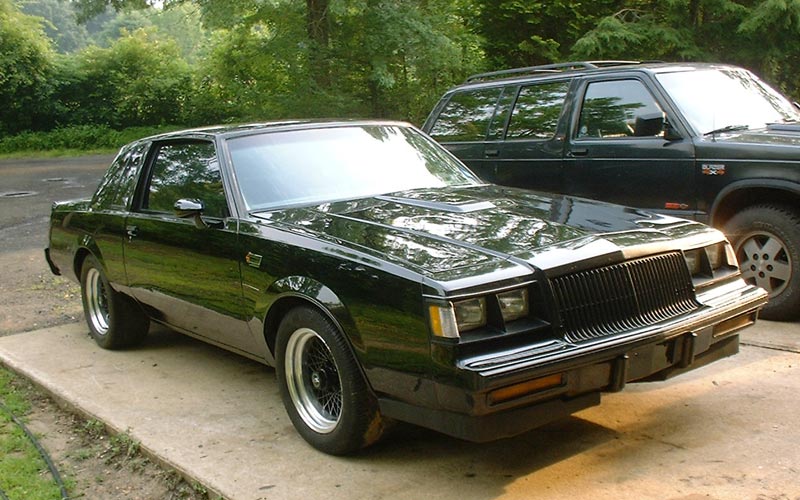
Between 1899 and 1902 two prototype vehicles were built[2] in Detroit, Michigan by Walter Lorenzo Marr. Some documentation exists of the 1901 or 1902 prototype with tiller steering[3] similar to the Oldsmobile Curved Dash.
Wednesday, May 5, 2010
New Luxury Detroit 2010: six-speed manual gearbox and electronic LSD
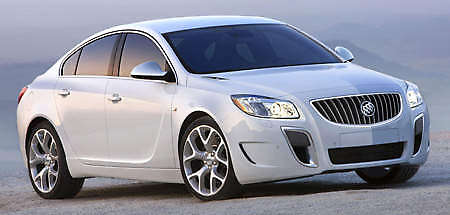
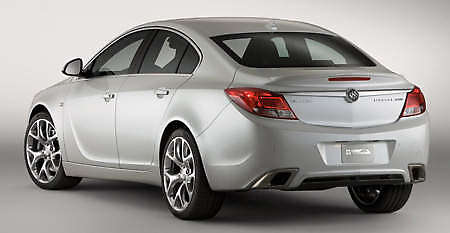
One of the eye catching displays over at GM is the Buick Regal GS. The Regal is basically the European Opel/Vauxhall Insignia rebadged as a Buick for the US and Chinese market (Buick is a highly regarded marque in China). This GS showcar features a potent performance package – 255 bhp/400 Nm 2.0-litre Ecotec turbo engine with power going to all wheels via a six-speed manual gearbox and electronic LSD.
Acceleration from nought to 60 mph (96 km/h) is “less than six seconds”. The Vauxhall Insignia VXR, which has a 320 bhp 2.8-litre Ecotec V6 turbo does the same sprint in 5.8 seconds. The Regal GS features a lowered body and aggresive styling that mimics the VXR, except that it wears Buick’s signature “waterfall grille”. The show car wears 20-inch wheels.
That front HiPerStrut suspension helps reduce torque steer and maintain negative camber during cornering, improving grip and feel while isolating undesirable feedback. The GS features Brembo brakes with cross-drilled rotors, four-piston aluminum calipers and uprated pads. Interactive Drive Control System (IDCS) chassis technology allows the selection of three modes – normal, sport and GS – that change suspension settings, throttle response and steering sensitivity.
Inside, the Regal GS features a full black interior, sport shifter, a suede-covered, flat-bottom steering wheel and Recaro seats with four-way lumbar support and cushion extensions.
Tuesday, March 23, 2010
Buick Park Avenue Ultra, 2003

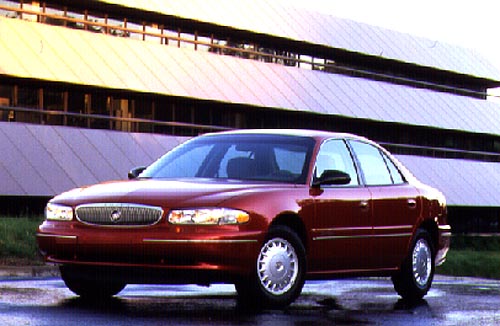
1997-2005An updated Park Avenue was released in 1997. Riding on the Buick Riviera's G-body, it was stronger and more substantial than its predecessor. New generations of the 3800 engine continued as the only powerplant, and the Park Avenue continued with minor updates since this date. The Park Avenue was discontinued for 2006 and replaced by the Buick Lucerne. The Lucerne also replaces the nearly identical but smaller Buick LeSabre.
Sunday, March 21, 2010
Buick Rendezvous, 2003
The Buick Rendezvous, introduced in the spring of 2001 as a 2002 model year vehicle and produced through the present, is a sport utility vehicle produced by the Buick division of General Motors.Background
Given the fact that the vast majority of SUVs were rarely taken off-pavement by their owners, much less driven under serious off-road conditions, a new type of car-based "crossover SUV" was developed that was hoped would provide all the elements that customers actually wanted from their SUVs such as cargo carrying capacity, elevated seating height and the suggestion of an active outdoor lifestyle with less of the negative attributes typically associated with traditional SUVs such as poor gas mileage, uncomfortable ride, high step-in height, propensity to roll over, etc. The formula of a car-based "soft-road" luxury SUV had proven marketable by the highly successful Lexus RX300 and was thought to be a promising new market category for Buick to exploit within this extremely profitable portion of the ever-expanding SUV category.
Technology and notable features
Buick's first truck in its lineup since 1923, the Rendezvous was billed as a combination of the best attributes of a minivan (large cargo capacity, seating for up to seven), a luxury automobile (ride, handling, smoothness) and a sport utility vehicle (truck styling and available all wheel drive).
The Rendezvous was produced at General Motors' Ramos Arizpe, Mexico assembly plant, where it shared an assembly line with the Pontiac Aztek.Like the Pontiac Aztek, the Buick Rendezvous is based on a shortened version of GM's 2nd generation U platform minivans.
Buick benchmarked their Park Avenue luxury sedan as the prototypical target for ride and handling for the Rendezvous. In order to provide a luxurious and responsive car-like ride, all Rendezvous came equipped with a fully independent rear suspension system regardless of optional content or trim level.
The Rendezvous' instrument cluster detailing featured teal illuminated needles and numbers set in a silver face accented by chrome trim rings that was meant to evoke the luxurious look and feel of an expensive watch or designer bracelet.
The Rendezvous boasted the ability to carry seven passengers when equipped with a third-row bench, a class-leading feature that Buick brought to market before its competitors.
The Rendezvous is able to carry within its interior the proverbial 4'x 8' sheet of plywood, a common and useful task most of its competitors are unable to perform.
In support of the Rendezvous' intended role as a versatile accoutrement for busy, upper-middle class people with families, it provided a center console with storage space and power points for a laptop computer as well as a separate spots to hold a woman's purse, a cell phone, pager or other small items that the owner would want to keep organized and readily accessible as well as an optional rear cargo organizer system and rear seat stereo system controls with headsets.
On the uplevel CXL model, a driver information center on the instrument panel provided the outside temperature, compass functions, a trip computer that included readings of fuel economy, range and fuel used. An optional second generation heads-up display was also available.An optional tire inflation monitoring system provided readings of tire pressure and warned if out of the specified range was a clever feature in the wake of the Ford Explorer/Firestone debacle that was in large part attributable to underinflated tires.
Monday, March 8, 2010
Buick Riviera Concept Coupe, 2007

Exterior Design - A Sense Of Existence, Not Anonymity
The Riviera design is structured around the Buick tri-shield logo, sitting proudly on a trihedral waterfall grille. This takes the traditional Buick treatment to a new level of sophisticated boldness.
The gullwing doors, selected for their exotic appeal, achieve an expansive entrance to the two-plus-two seating configuration. Measuring 1938 millimeters at their widest point, they add to the coupe's sleek sideline. At night, fully opened doors gently shine the "Buick" name on the ground.
The use of carbon fiber in all body panels allowed the designers greater flexibility through reduced mass and added strength. This made the gullwing engineering demands easier to realize and sharp, tight radius curves possible across the body surface.
Interior Design : All About Relaxation
In a word - sanctuary. The use of rich blue and subtle creams, representing earth and water themes, are conveyed through high-quality leather bucket seats, plush carpet and a luxurious padded steering wheel. Completing the organic feel, the roof comprises two shaded glass windows offering increased headroom and a celestial connection for occupants.
The interior has no discernable start and finish point for the front and sides, creating a comfortable lounge feel. It is immediately futuristic yet somehow familiar.
The three-dimensional speedometer, inspired by past classics but utterly modern in design, compliments the touchpad styled central console loosely modeled on a computer mouse. An LCD display screen crowns the central console.
Interior designers were encouraged to consider people's personal belongings to enhance their feeling of familiarity and comfort in the vehicle. Continuing the theme of calm simplicity, electronic shifter pads replace the traditional transmission shifter. Controls are kept to a minimum to avoid driver distraction.Ambient light strips are applied from across the console and inserted on the door liner, stretching to the front seats. Deliberately imitating precious Chinese jade stone, the lights are tinted a subtle icy green, which also offers tribute to a favored color of Buicks in days gone by.
Tuesday, November 24, 2009
2011 Buick Regal Sport Sedan Aesthetics 2.0L Turbo Engine V-6, four-Cylinder.
Saturday, November 14, 2009
Buick Business Concept MPV by PATAC powered 2.4-liter 4-cylinder Engine
Thursday, October 22, 2009
2010 Buick Lacrosse Car Pictures
Buick LaCrosse CXS in quicksilver metallic
LaCrosse CXS with articulating headlamps
CXS with 19" painted, machined alloy wheels
Buick CXL in quicksilver
Buick signature waterfall grille
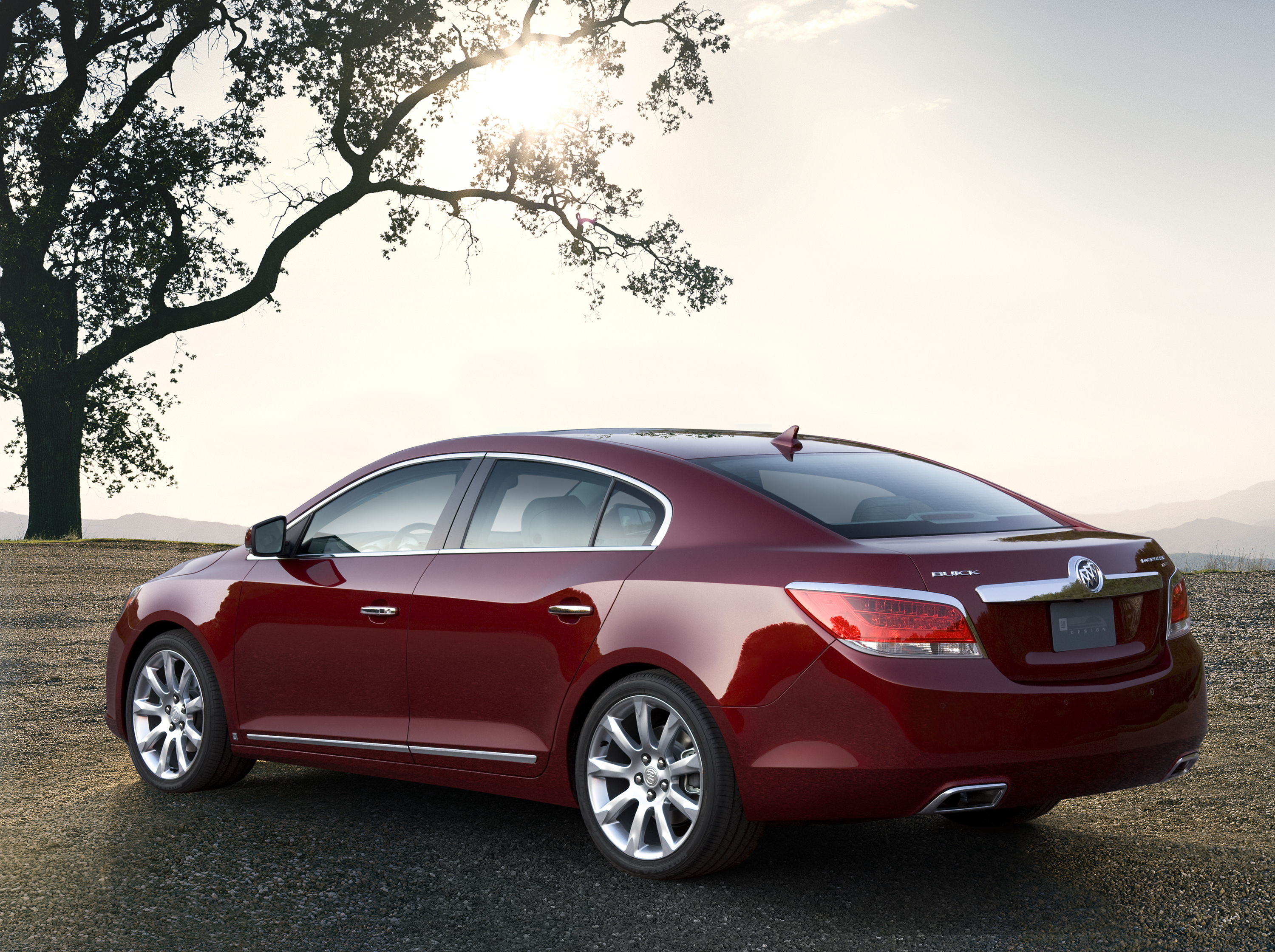
The Buick LaCrosse is a mid-size sedan produced by General Motors and sold under the Buick brand. The LaCrosse, only available as a four-door sedan, replaced the Buick Century and Regal in North America beginning in the 2005 model year.
Arriving as a 2010 model, the new Buick Lacrosse is built upon the mid-size Epsilon II platform, which is also the basis for the Opel Insignia and the 2010 Saab 9-5. The design was based on 2008 Buick Invicta concept, and replaces both the Chinese and North American models. Buick states that the new LaCrosse will be "America's Lexus fighter".
The vehicle was unveiled at the 2009 NAIAS, and at the 2009 Montreal International Auto Show as the Buick Allure. The Chinese version was shown at Auto Shanghai in April 2009.
Production of North American models was moved from Oshawa to the Fairfax Assembly plant in Kansas City, Kansas. Delivery of 2010 year models were delayed a few weeks due to quality concerns.
Soon after production had begun, General Motors Canada renamed the Allure to LaCrosse, to correspond with the car's global marketing. GM Canada has offered existing Allure owners the option to change nameplates to LaCrosse.
The 2010 Lacrosse will be sold in Mexico starting in October, as the Buick brand returns to the country after 13 years of absence.
Saturday, September 19, 2009
Buick

2010 Buick LaCrosse
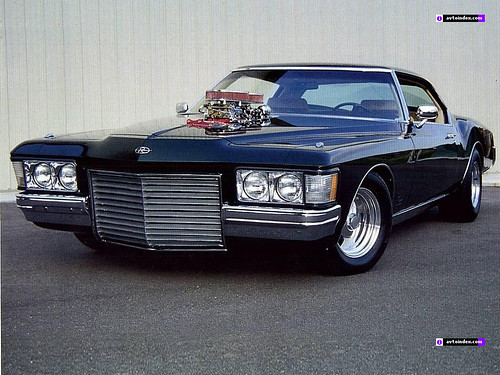
1973 great, Buick BivieraBuick History
Buick originated as an independent motor car manufacturer, the 'Buick Motor Company, incorporated on May 19, 1903 by Scottish-American David Dunbar Buick (who invented the overhead valve engine on which the company's success was based), Detroit , Michigan. Later that year, the struggling company was purchased by James H. Whiting (1842-1919), who moved it to his hometown of Flint, Michigan, and brought in William C. Durant in 1904 to manage its new acquisition. Buick sold his stock for a small sum upon departure, and died in modest circumstances twenty-five years later.
Durant after the acquisition of Buick soon became the largest car maker in America. Using the profits from this, Durant embarked on a series of corporate acquisitions, calling the new mega-corporation General Motors.
At first, manufacturers understand that General Motors competed against each other, that soon ended with Durant. He wanted to be a General Motors division to target one class of each purchaser, and in his new scheme Buick was near the top, only one was the Cadillac brand had more prestige.
In 1911, Buick introduced its first closed-body car, four years ahead of Ford. In 1929, Buick Motor Division launched the Marquette sister brand, designed to bridge the price gap between Buick and Oldsmobile, however , Marquette was discontinued in 1930.
Today Buick retains that position in the GM lineup. The target of the Buick was a client who wanted a comfortable car, but possibly not quite rich enough to afford a Cadillac or not desiring the ostentation of one, and I wanted a car on the market definitely above the norm. Buick is one of the oldest brands in the world, as the Mercedes-Benz, Renault, Peugeot, Cadillac, Daimler and the discontinued Oldsmobile.
Speculation existed, however, as to whether GM will eliminate the Buick brand to cut costs. This followed the temporary suspension of GM's planned Zeta project to develop new rear wheel drive cars fitting the Buick market niche . GM also has started consolidating of Buick, Pontiac and GMC trucks into a single dealer franchises, which makes it simple to eliminate the Buick brand without leaving dealers devoid of product. However, with the development of the Zeta platform still ongoing (including the development of the 2006 VE Commodore and Chevrolet Camaro), it may be likely that Buick will survive still.
Buick began consolidating its lineup in 2005, replacing the Century and Regal with the LaCrosse (known as the Buick Allure in Canada), and the LeSabre and Park Avenue with the Lucerne in 2006. Both of its SUVs, the Rendezvous and Rainier were discontinued in 2007 to make way for the new 2008 Enclave, while the slow-selling Terraza minivan also was abandoned in 2008. That leaves the marque with just three models in the United States. There have been rumors about Edmund'seMotor Trend Buick will have a roadster sedan in 2010, which could mean that the marque survive beyond May 2009.
There is speculation that future Buick models will have interior and exterior designs with an increasing influence of China Buick. This is due to the overwhelming success of the Buick and a high reputation in China. Motor Authority has also written that it will introduce the Buick Excelle Buick in the United States in 2008.